SAP go-live Monday
A maintenance planner can’t raise a work order on go-live Monday. Then the same project starts with the end.
Story-based animation · Brisbane, Australia
Thousands of staff, departments that don’t agree, one go-live. A short story shows everyone the finished project before the build starts. See the IT programme films →
Every frame above is from a finished film. Tap one to watch it with sound.
For IT programmes and projects
A two-minute story follows one person through their Monday after go-live, so every stakeholder pictures the same finished project.
A maintenance planner can’t raise a work order on go-live Monday. Then the same project starts with the end.
Four hours of slides at kickoff, and everyone walks out picturing a different system. Then a short story of the finished system, before the build starts.
A new billing system goes live without a hitch. Then a customer’s first bill looks nothing like the last, and she thinks it’s a scam.
For learning and HR teams
Someone like your staff on a real day: the wrong way, then the right way, then their turn. Ready for Rise 360, Storyline or your LMS.
Everyone passed the privacy course, and a colleague’s pay details still went to the wrong Michael. Then the same Rise lesson, opened with his story.
A fraud hold declines a 72-year-old’s card at the checkout. The same procedure, with a different first sentence.
A fake payroll email lands at 4.52 on a Friday, and he types his password. The cyber module, told from inside his inbox.
Staff passed the compliance quiz. Then a busy morning, and the moment the slides never showed them.
For small businesses
A short story follows one client instead of a list of services: where they start, what you do for them, and where they end up.
An 18-year-old won’t read a list of services. She’ll watch her own life with one firm, from her first tax return to eighty.
Two brokers in one town offer the same loans. One website is a list. The other is a short story of a self-employed couple getting a yes.
A practice that runs on one person’s memory, and the new starter who has to learn it.
A workshop burns at two in the morning. A broker’s homepage story shows the owner what she does on the worst day, before anything burns.
For government
A new service, a rule change, a system going live. Most people won’t read the page about it. They’ll watch someone like them go through it, with captions, a transcript and an audio-described version.
Nine departments, one new grants system, and nine different pictures of it. Then the kickoff opens with one person’s first week after go-live.
One new patient record for every hospital in the region. The rollout starts with one patient’s day on it, from the ambulance to her GP.
A hospital system goes live at midnight. At 2 am, a night nurse can’t find the medication screen.
How a video gets made
Shown with a real one: SAP go-live Monday, made for programmes facing the 2027 deadline.
Half an hour on a call. I read your documents and website first, so we start on what matters.
The brief: thousands of people at a mine site move to new SAP screens on one Monday. Show them that Monday before it happens.
One person, one day, the old way and the new. You sign off the script.
Meet Sam. He plans maintenance at a mine site. Twelve years in the old screens. He can raise a work order with his eyes shut. On go-live Monday, he can’t find it. The crew is waiting.
Every scene as a still frame. You sign them off before anything is animated.

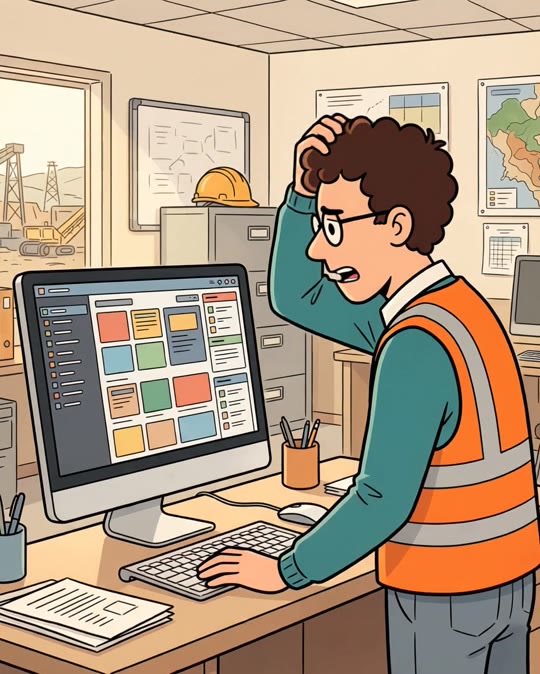
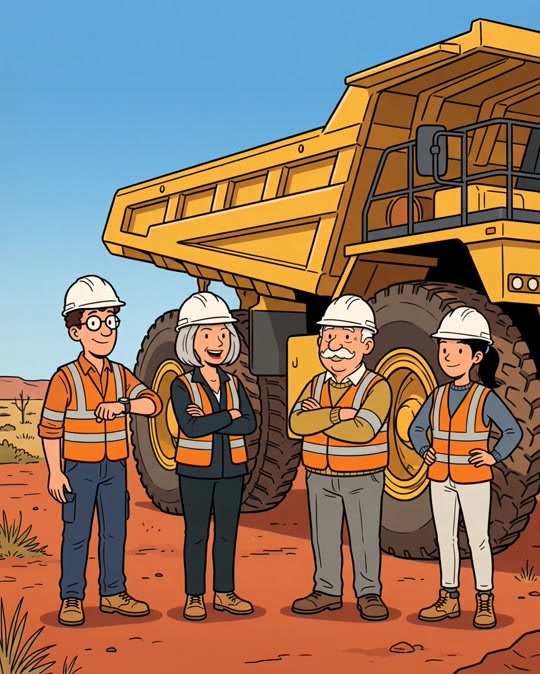
Scenes 3, 4 and 5, signed off as stills
Animation, a professional voice, music and captions. Versions for your website, social media and your LMS.
Usually about three weeks from our first conversation.
Prices
Priced by length, from a one-minute film, with the script, a professional voice, music and captions included. Four videos of the same length are 10% off. See the prices
About
Storytelling consultants teach your leaders to tell stories. I make the story of your project, your business or your service.
Questions
Fixed prices by length, from a one-minute film, are on the prices page. Corporate work is quoted, because every job is different.
About three weeks from our first conversation, depending on how quickly the script and the scenes are signed off.
The scenes and the animation are made with AI tools, from a script and a storyboard you sign off. The story comes from our conversation, and nothing is animated until you’ve approved every scene.
Watch The moment the rules matter and judge for yourself. You see every scene as a still first, and anything that looks wrong is redrawn before it moves.
I work on the script with you until you’re happy with it. On the video, you get two rounds of changes. A third round of changes to the video, or any after it, is A$250 + GST a round, to cover the extra production time and costs. If something in the animation itself goes wrong, such as a hand or a cup that moves the wrong way, I fix it at no cost, in a 2D animated explainer or film-style.
Yes. Each story comes as a captioned video, ready for a Rise 360 lesson, Storyline or any LMS.
A half-hour conversation, your website or documents, and quick sign-offs on the script and the storyboard. How I break your idea down →
Yes, before we start. The story needs your situation, not your secrets, so you never have to send anything confidential.
You do. Use it on your website, LinkedIn, intranet, LMS and in presentations.
Contact
A line or two is enough. I’ll come back to you by email.
Prefer LinkedIn? Message Ken McHardie on LinkedIn.