Explainer Makers

Government

Public information people understand.Told as a short story.

A new service, a rule change, a system going live. Most people won’t read the page about it. They’ll watch someone like them go through it, in under two minutes. Every film comes with captions, a transcript and an audio-described version.

Now playing
One week after go-live

Why a story

A story reaches people a page doesn’t.The research, and what Australian campaigns found.

About 44 in every 100 Australians aged 15 to 74 read at Level 2 or below on the international adult literacy scale. That’s the latest national count, from 2011–12.

44 in 100Australians aged 15 to 74 at literacy Level 2 or below. Australian Bureau of Statistics, 2011–12.
  • Australian Government research asked people. Aboriginal and Torres Strait Islander participants said they preferred television for government information because it “allowed a ‘story’ to be told”, making it easy to engage with and understand. ORIMA Research for the Department of Finance, 2014.
  • A story campaign moved calls. Don’t Make Smokes Your Story follows Ted, an Aboriginal man, talking about smoking and his family. In 2018, 86% of Indigenous smokers and recent quitters were aware of it, and Quitline calls went from 4,314 in the five weeks before to 4,859 during the campaign. Department of Health evaluation, 2018.
  • Story ads lift calls. In Victoria, Quitline calls rose 13% for each extra weekly showing of emotional story ads. Calls from lower-income smokers rose more. Durkin, Wakefield & Spittal, 2011.
  • Stories are remembered. Across 37 studies covering 33,078 people, stories were understood and remembered better than explanations. Mar et al., 2021.
  • A voice with the pictures helps most. People with low health literacy remembered more from narrated animation than from narrated still pictures. Meppelink et al., 2015.
  • Animation lifts understanding. Animated health information improved knowledge in 48 of the 60 trials that measured it, across 28 countries. Moe-Byrne et al., 2025.

Every source is listed, with a link, at the foot of this page. See the sources.

Accessibility, built in

Made to the rules government video has to meet.On every government film.

The Australian Government Style Manual says audio-visual content must have a transcript, closed captions and an audio description. Every government film I make comes with all three.

Every government film comes with:

  • Closed captionsNo more than 2 lines of 42 characters, checked for accuracy and timing.
  • A full transcriptEvery line, who says it, and the sounds in square brackets.
  • An audio-described versionWhat’s on screen, described in the pauses, for people who can’t see the video.
  • Readable on screenText that meets WCAG contrast, and nothing that flashes more than 3 times a second.
  • A plain-language scriptSigned off by you before anything is made.
  • WCAG 2.2. Captions for prerecorded video are Level A (1.2.2). Audio description is Level AA (1.2.5).
  • Federal. The Digital Service Standard asks agencies to meet the latest version of WCAG.
  • Queensland. Agencies must meet the latest WCAG at Level A and AA.
  • The Style Manual. Captions of no more than 2 lines and 42 characters a line, a transcript that ends “End of transcript”, and nothing that flashes more than 3 times a second.
  • Other languages. Translated versions are quoted per language.

What they’re for

One person, one change.Shown before it happens.

  1. 01A service, explained

    How to apply, what happens next and who to call, told through one person who needs it.

  2. 02A rule or a change

    What’s different from Monday, for the people it touches.

  3. 03A system going live

    Kickoff and go-live films for staff, with a cut for each department.

  4. 04A campaign

    One story that asks people to do one thing.

I’ve made screen-recorded training for government, and done project work inside 28 organisations, including Queensland Police, BP, IBM and Microsoft.

Films for public services

Government, health, utilities.One person through each change.

A department’s new grants system, a patient’s day on a new record, a night nurse at go-live, a customer’s first new bill. Tap one to watch it with sound.

KickoffGovernment

One week after go-live

Nine departments, one new grants system, and nine different pictures of it. Then the kickoff opens with one person’s first week after go-live.

RolloutHospital

Rose’s record

One new patient record for every hospital in the region. The rollout starts with one patient’s day on it, from the ambulance to her GP.

Go-live for staffHospital

Go-live night

A hospital system goes live at midnight. At 2 am, a night nurse can’t find the medication screen.

Go-live for customersUtilities

The new bill

A new billing system goes live without a hitch. Then a customer’s first bill looks nothing like the last, and she thinks it’s a scam.

Government work

Every government job is different.So I quote each one.

Tell me who the film is for, what they need to do, and who signs it off. I’ll come back with a fixed quote, so the price doesn’t move. Captions, a transcript and an audio-described version are in every quote.

How a video gets made

We talk. I write it.You see every scene before it moves.

Shown with a real one: SAP go-live Monday, made for programmes facing the 2027 deadline.

01

We talk

An hour on a call. I read your documents and website first, so we start on what matters.

The brief: thousands of people at a mine site move to new SAP screens on one Monday. Show them that Monday before it happens.

02

I write the story

One person, one day, the old way and the new. You sign off the script.

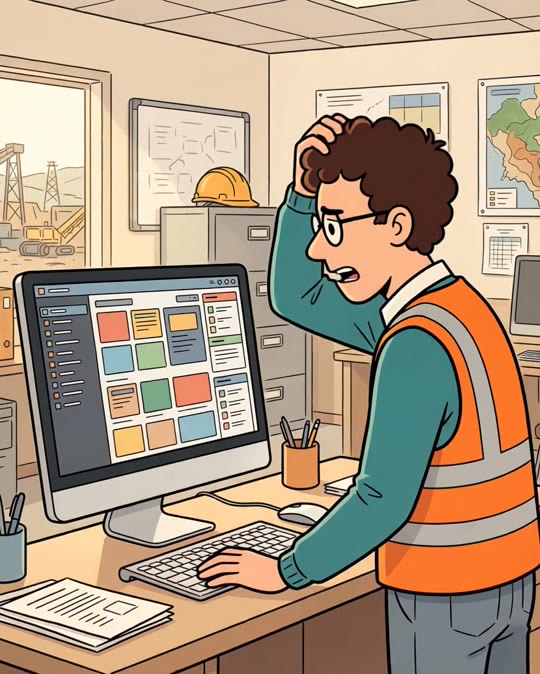
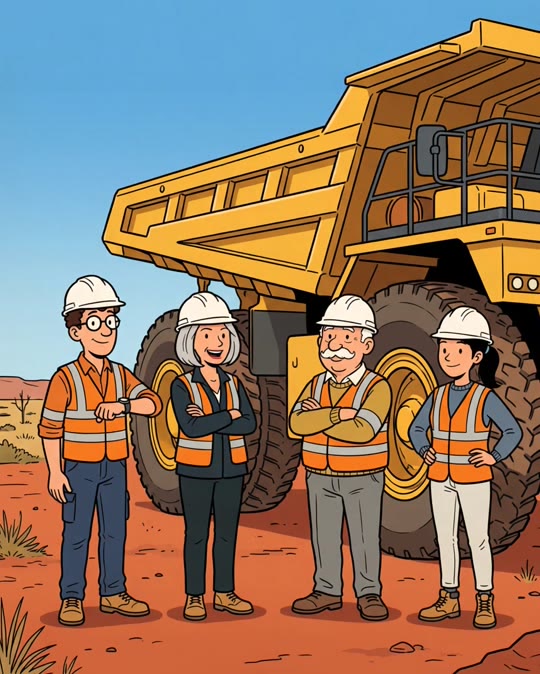
Meet Sam. He plans maintenance at a mine site. Twelve years in the old screens. He can raise a work order with his eyes shut. On go-live Monday, he can’t find it. The crew is waiting.

03

You see every scene

Every scene as a still frame. You sign them off before anything is animated.

Scene 3: Sam at his old screen
Scene 4: Sam lost on go-live Monday
Scene 5: the crew waiting by the truck

Scenes 3, 4 and 5, signed off as stills

04

Then it moves

Animation, a professional voice, music and captions. Versions for your website and LinkedIn.

Usually about three weeks from our first conversation.

How I break a big idea into scenes

Questions

The short answers.Ask me anything else.

What does government work cost?

Every government job is quoted at a fixed price, after a conversation about the audience, the message and who signs it off. The price doesn’t move.

Do the films meet accessibility requirements?

Every film comes with closed captions and an audio-described version, which is what WCAG 2.2 asks of prerecorded video at Level AA, and the full transcript the Style Manual asks for. On-screen text meets WCAG contrast, and nothing flashes more than three times a second.

Can it go through our approvals?

Yes. You sign off the script, then the storyboard, before anything moves, so policy and legal review happen early, while changes are quick.

Can you make versions in other languages?

Yes. Each language is quoted.

Will you sign our NDA?

Yes, before we start. The story needs your situation, not your secrets, so you never have to send anything confidential.

How long does it take?

About three weeks from our first conversation, depending on how quickly the script and the scenes are signed off.

Is it made with AI?

The scenes and the animation are made with AI tools, from a script and a storyboard you sign off. The story comes from our conversation, and nothing is animated until you’ve approved every scene.

Will it look like AI?

Watch The moment the rules matter and judge for yourself. You see every scene as a still first, and anything that looks wrong is redrawn before it moves.

Who owns the finished video?

You do. Use it on your website, LinkedIn, intranet, LMS and in presentations.

Sources

Every figure, linked.Read them yourself.

  1. Australian Government Style Manual. Requirements and standards for video and audio (updated 1 April 2025). www.stylemanual.gov.au/format-writing-and-structure/content-formats/video-and-audio/requirements-and-standards-video-and-audio
  2. W3C. Web Content Accessibility Guidelines (WCAG) 2.2: Understanding 1.2.2 Captions (Prerecorded). www.w3.org/WAI/WCAG22/Understanding/captions-prerecorded.html
  3. W3C. Web Content Accessibility Guidelines (WCAG) 2.2: Understanding 1.2.5 Audio Description (Prerecorded). www.w3.org/WAI/WCAG22/Understanding/audio-description-prerecorded.html
  4. Digital Transformation Agency. Digital Service Standard, Criterion 3: Leave no one behind. www.digital.gov.au/policy/digital-experience/digital-service-standard/criterion-3
  5. Queensland Government. Make digital services accessible. www.forgov.qld.gov.au/information-and-communication-technology/qgea-policies-standards-and-guidelines/digital-service-standard/make-digital-services-accessible
  6. ORIMA Research for the Department of Finance (2014). Media consumption and communication preferences of Aboriginal and Torres Strait Islander audiences: Qualitative research, p. 48. www.finance.gov.au/sites/default/files/2019-11/qualitative-indigenous-research-report-2014.pdf
  7. ORC International for the Department of Health (2018). Don’t Make Smokes Your Story campaign: 2018 evaluation report. www.health.gov.au/sites/default/files/don-t-make-smokes-your-story-campaign-2018-evaluation-report.pdf
  8. Durkin, S. J., Wakefield, M. A. & Spittal, M. J. (2011). Which types of televised anti-tobacco campaigns prompt more quitline calls from disadvantaged groups? Health Education Research, 26(6), 998–1009. doi.org/10.1093/her/cyr048
  9. Mar, R. A., Li, J., Nguyen, A. T. P. & Ta, C. P. (2021). Memory and comprehension of narrative versus expository texts: A meta-analysis. Psychonomic Bulletin & Review, 28, 732–749. doi.org/10.3758/s13423-020-01853-1
  10. Meppelink, C. S., van Weert, J. C. M., Haven, C. J. & Smit, E. G. (2015). The effectiveness of health animations in audiences with different health literacy levels: An experimental study. Journal of Medical Internet Research, 17(1), e11. doi.org/10.2196/jmir.3979
  11. Moe-Byrne, T. et al. (2025). How effective are video animations as information tools for patients and the general public? An updated systematic review. Frontiers in Digital Health, 7. doi.org/10.3389/fdgth.2025.1717044
  12. Australian Bureau of Statistics (2013). Programme for the International Assessment of Adult Competencies, Australia, 2011–12. www.abs.gov.au/statistics/people/education/programme-international-assessment-adult-competencies-australia/latest-release

Contact

Start a conversation.Tell me what you need, and when.

A line or two is enough. I’ll come back to you by email.

Prefer LinkedIn? Message Ken McHardie on LinkedIn.