Why it works
People remember a story.Here’s the research behind that.
You’ve sent the email, posted the update and attached the sixty-page PDF. A week later, how many people could tell you what it said? Researchers have tested what works better for decades. Here’s what they found, with every source, and where the evidence stops.
Sixty pages
Memory
Stories are understood.And remembered.
In 2021, a team at York University in Toronto pooled 37 studies covering 33,078 people. Each one compared a story with an explanation.
Stories won on both counts. People understood them better, and they remembered them better.
It held for adults and children, for reading and listening, and for tests on the day or later.
Mar, Li, Nguyen & Ta, Psychonomic Bulletin & Review, 2021
Belief and action
Stories change minds.And what people mean to do.
A second review pooled 110 tests of stories. Stories shifted what people believed, how they felt about it, what they meant to do and what they did.
The effects are modest. The last one, what people did, rests on only five studies.
- Believe37 tests
- Feel40 tests
- Intend28 tests
- Do5 tests
Braddock & Dillard, Communication Monographs, 2016
What pulls people into a story? A review of 132 results found three things. They’re how I build every film.
- 01A character they recognise
Sam plans maintenance at a mine site. Twelve years in the old screens.
- 02A plot they can picture
Go-live Monday. He can’t find the work order. The crew is waiting.
- 03Details that ring true
He could raise a work order with his eyes shut. Not on the new screens.
van Laer, de Ruyter, Visconti & Wetzels, Journal of Consumer Research, 2014
The picture
Animation works when it shows the job.Decoration teaches nothing.
A review of 26 studies compared animation with still pictures. Animation that showed the subject did better. Animation added as decoration made no difference.
The biggest gain was for hands-on tasks: how to do something, step by step.
The voice matters too. Narrated animation beat still pictures. Animation with text on the screen didn’t.
And across 117 studies, training that showed the wrong way, then the right way, carried over to the job best.
So every scene shows one moment of the real job, told by a professional voice. Nothing moves just to move.
Höffler & Leutner, Learning and Instruction, 2007 · Berney & Bétrancourt, Computers & Education, 2016 · Taylor, Russ-Eft & Chan, Journal of Applied Psychology, 2005
Added, not replaced
Add the story to what you have.Don’t replace it.
A review of 105 randomised trials, with 7,776 students, tested video two ways. Swapped in for existing teaching, it helped a little. Added to it, it helped a lot.
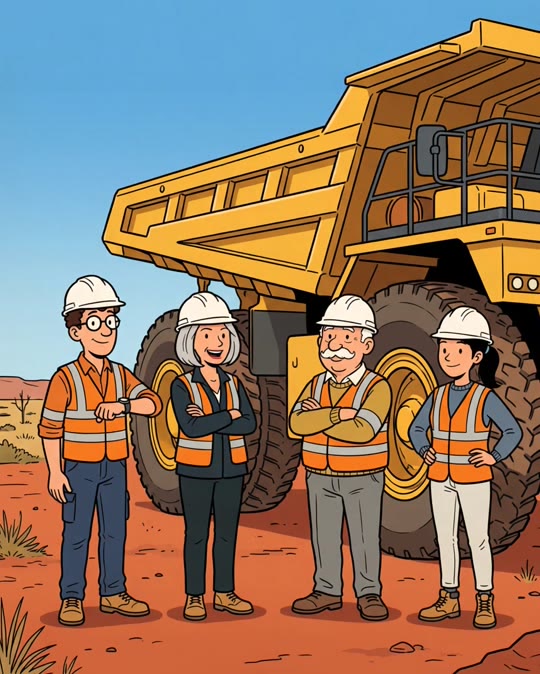 The storyGo-live email
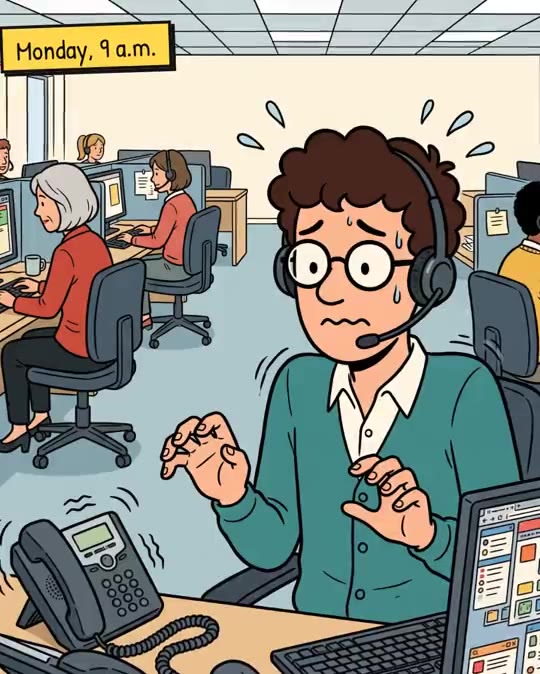 The storyQuiz
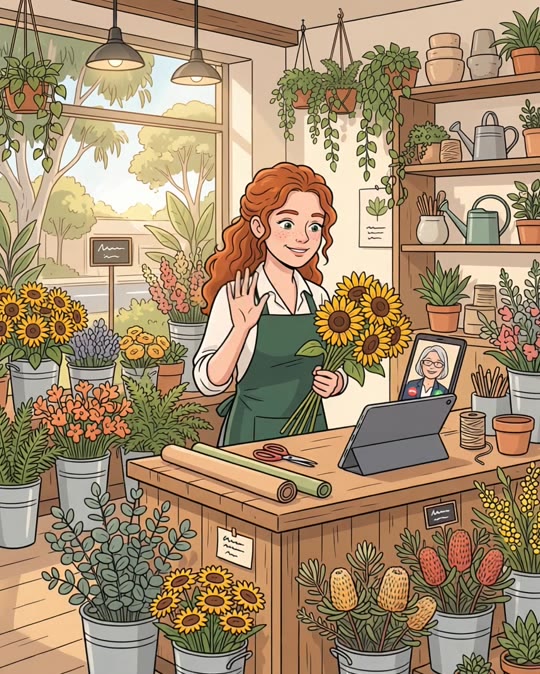 The storyFirst meeting
- Added to existing teaching0.80
- Instead of existing teaching0.28
So your team keeps the course, the project plan and the website. I make the story that goes in each one.
Noetel et al., Review of Educational Research, 2021
For government
Public information has to reach everyone.Not only the people who read well.
About 44 in every 100 Australians aged 15 to 74 read at Level 2 or below on the international adult literacy scale. That’s the latest national count, from 2011–12.
- A voice with the pictures helps most. People with low health literacy remembered more from narrated animation than from narrated still pictures. The study tested 231 adults aged 55 and over.
- Animation lifts understanding. Animated health information improved knowledge in 48 of the 60 trials that measured it, across 28 countries.
- Campaigns built on stories get results. The US government’s Tips From Former Smokers campaign tells real people’s stories. Its health agency estimates 16.4 million quit attempts and about one million quits, 2012 to 2018.
- It has worked here too. In Victoria, Quitline calls rose 13% for each extra weekly showing of emotional story ads. Calls from lower-income smokers rose more.
Every government film comes with:
- Closed captions
- A transcript
- An audio-described version
That’s what the Australian Government Style Manual asks of video.
Sources: ABS, 2013 · Meppelink et al., 2015 · Moe-Byrne et al., 2025 · CDC, 2012–2018 · Durkin, Wakefield & Spittal, 2011 · Style Manual, 2025. Full list below.
Channels
It isn’t social media or video.The film goes on social media.
Communication teams already rate social media their most important channel. In the Asia-Pacific Communication Monitor, 91.6% of 1,149 professionals did.
So the channel isn’t the question. What you put there is.
You own the finished film. Use it on LinkedIn, your website, the intranet, your LMS and in presentations.
Macnamara, Lwin, Hung-Baesecke & Zerfass, Asia-Pacific Communication Monitor 2020/21
- Your website
- The intranet
- Your LMS
- Presentations
The evidence, side by side
How big the difference was.And where there wasn’t one.
Researchers report results as an effect size. Around 0.2 is small, 0.5 medium and 0.8 large. The grey bars are where story or animation didn’t win.
What the evidence doesn’t say.
- Numbers change beliefs more than stories do. Across 15 studies, statistics did better on what people believed. Stories did better on what they meant to do. So I put your number inside the story.
- Decoration doesn’t teach. Animation only helps when it shows the real thing. Every scene I make shows one moment of the job.
- Most studies are short. Many ran in classrooms and labs, and tested people soon afterwards. Long-term results are thinner.
- No study can promise your result. Not your sales, your go-live or your campaign. I can promise a film made the way this research says works.
Sources
Every source, linked.Check them yourself.
- Mar, R. A., Li, J., Nguyen, A. T. P. & Ta, C. P. (2021). Memory and comprehension of narrative versus expository texts: A meta-analysis. Psychonomic Bulletin & Review, 28, 732–749. doi.org/10.3758/s13423-020-01853-1
- Braddock, K. & Dillard, J. P. (2016). Meta-analytic evidence for the persuasive effect of narratives on beliefs, attitudes, intentions, and behaviors. Communication Monographs, 83(4), 446–467. doi.org/10.1080/03637751.2015.1128555
- van Laer, T., de Ruyter, K., Visconti, L. M. & Wetzels, M. (2014). The extended transportation-imagery model: A meta-analysis of the antecedents and consequences of consumers’ narrative transportation. Journal of Consumer Research, 40(5), 797–817. doi.org/10.1086/673383
- Zebregs, S., van den Putte, B., Neijens, P. & de Graaf, A. (2015). The differential impact of statistical and narrative evidence on beliefs, attitude, and intention: A meta-analysis. Health Communication, 30(3), 282–289. doi.org/10.1080/10410236.2013.842528
- Höffler, T. N. & Leutner, D. (2007). Instructional animation versus static pictures: A meta-analysis. Learning and Instruction, 17(6), 722–738. doi.org/10.1016/j.learninstruc.2007.09.013
- Berney, S. & Bétrancourt, M. (2016). Does animation enhance learning? A meta-analysis. Computers & Education, 101, 150–167. doi.org/10.1016/j.compedu.2016.06.005
- Taylor, P. J., Russ-Eft, D. F. & Chan, D. W. L. (2005). A meta-analytic review of behavior modeling training. Journal of Applied Psychology, 90(4), 692–709. doi.org/10.1037/0021-9010.90.4.692
- Noetel, M., Griffith, S., Delaney, O., Sanders, T., Parker, P. D., del Pozo Cruz, B. & Lonsdale, C. (2021). Video improves learning in higher education: A systematic review. Review of Educational Research, 91(2), 204–236. doi.org/10.3102/0034654321990713
- Meppelink, C. S., van Weert, J. C. M., Haven, C. J. & Smit, E. G. (2015). The effectiveness of health animations in audiences with different health literacy levels: An experimental study. Journal of Medical Internet Research, 17(1), e11. doi.org/10.2196/jmir.3979
- Moe-Byrne, T., Knapp, P., Lidster, A., Ahamed, M., O’Hare, H., Golder, S., Lister, J. & Adamson, J. (2025). How effective are video animations as information tools for patients and the general public? An updated systematic review. Frontiers in Digital Health, 7. doi.org/10.3389/fdgth.2025.1717044
- Australian Bureau of Statistics (2013). Programme for the International Assessment of Adult Competencies, Australia, 2011–12. www.abs.gov.au/statistics/people/education/programme-international-assessment-adult-competencies-australia/latest-release
- Centers for Disease Control and Prevention. Tips From Former Smokers: campaign impact and results, 2012–2018. www.cdc.gov/tobacco/campaign/tips/about/impact/campaign-impact-results.html
- Durkin, S. J., Wakefield, M. A. & Spittal, M. J. (2011). Which types of televised anti-tobacco campaigns prompt more quitline calls from disadvantaged groups? Health Education Research, 26(6), 998–1009. doi.org/10.1093/her/cyr048
- Australian Government Style Manual. Requirements and standards for video and audio (updated 1 April 2025). www.stylemanual.gov.au/format-writing-and-structure/content-formats/video-and-audio/requirements-and-standards-video-and-audio
- Macnamara, J., Lwin, M. O., Hung-Baesecke, C. F. & Zerfass, A. (2021). Asia-Pacific Communication Monitor 2020/21. A survey of 1,155 communication professionals in 15 countries and territories. opus.lib.uts.edu.au/bitstream/10453/158542/2/APCM%202020-21%20Report.pdf
Next
Put a story in front of your people.Start with one film.
Small business prices are on one page. Corporate and government work is quoted per job, at a fixed price.
Contact
Start a conversation.Tell me what you need, and when.
A line or two is enough. I’ll come back to you by email.
Prefer LinkedIn? Message Ken McHardie on LinkedIn.